A better future for dozens of cats
May 7th, 2010
The cats were living in a variety of indoor and outdoor areas, and many had treatable respiratory and skin conditions. Most of the animals were spayed and neutered or separated by gender if they were not.
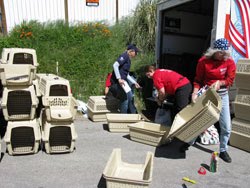 After arriving on the scene, UAN’s Emergency Animal Rescue Service (EARS) volunteers began to assemble dozens of plastic crates – provided by the PetSmart Charities Emergency Relief Waggin’ – to transport the cats from the house to the temporary shelter another team of EARS volunteers was setting up in Lancaster.
I was part of the team that went to remove the cats, and I was awed and impressed by the amazing teamwork among all of the agencies involved. (And equally amazed by how tiring assembling plastic crates can be!)
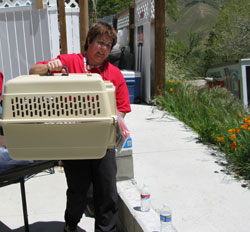 Four EARS volunteers helped process the animals coming out of the house – more than 120 of them. They noted their physical characteristics, took identification photos, affixed paperwork to their kennels and loaded them onto the transport vehicle.
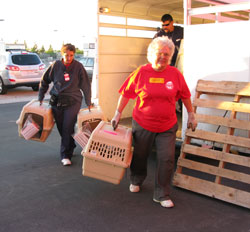
Around 4 p.m., the first load of cats arrived at the shelter and were introduced to their new digs – clean cages complete with a fresh litter pan, water and food. The UAN and HSUS teams were at the shelter until 10 p.m. getting the cats settled into their new spaces. It was a long day but a rewarding one: we were there when the animals and overwhelmed rescuer needed us, and the future would surely be better for all of them.
Photos (top to bottom): UAN and HSUS personnel assemble crates. EARS volunteer Valerie Clark of Sacramento, California gets ready to load a cat onto the transport vehicle. Abby, one of the lost dogs who was lucky enough to encounter an EARS volunteer. EARS volunteer Linda Sherman of Modesto, California unloads a cat from the transport vehicle.